
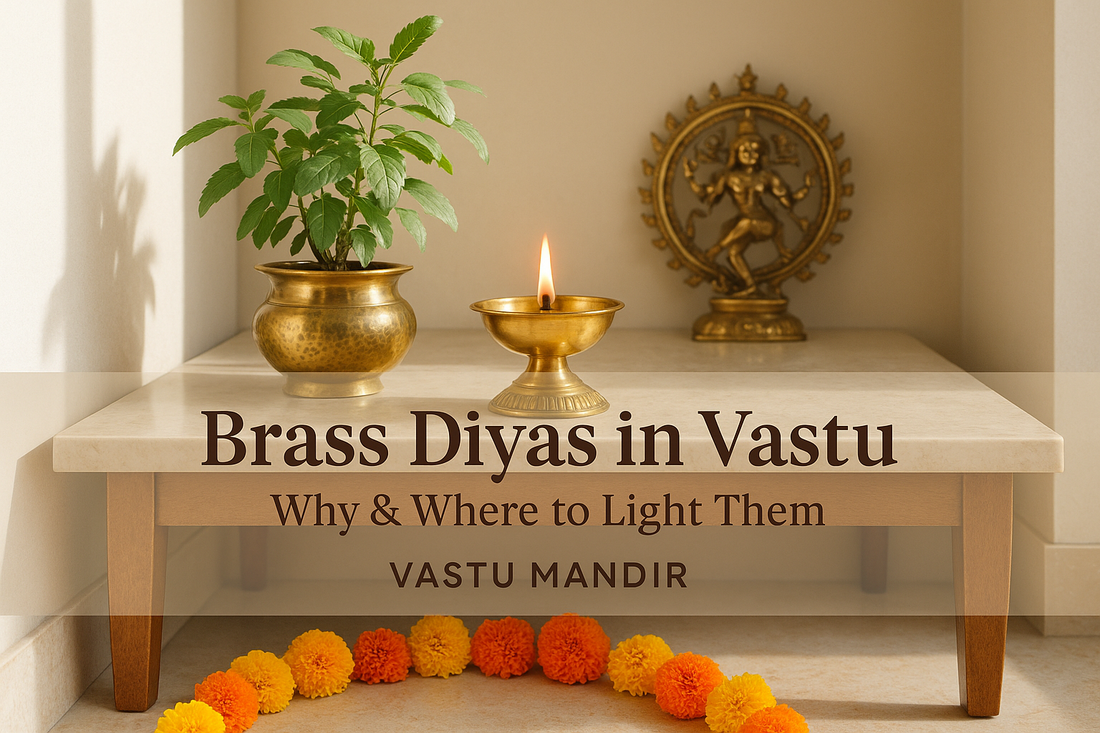
Brass Diyas in Vastu: Why & Where to Light Them
Vastu MandirShare
Why Diyas Matter in Vastu
In Vastu Shastra, light represents Agni (fire) — the energy of life, purity, and transformation. Lighting a diya is not just ritual; it is a way to invite positivity and dissolve darkness, both literally and energetically.
-
Brass diyas are considered the most auspicious because brass balances energy fields better than steel, glass, or aluminum.
-
A glowing diya is a symbol of clarity — it burns away negativity and illuminates the home with prosperity.
-
Lighting diyas at the right place and time harmonizes the fire element and strengthens health, wealth, and devotion.
Why Brass Diyas Are Preferred
-
Conductive Metal: Brass radiates stable, sattvic energy.
-
Durability: Unlike glass or clay, brass lasts for years, absorbing prayers and energy.
-
Purification: Fire + brass creates a natural purifier for the environment.
-
Tradition: Scriptures mention brass diyas as carriers of blessings.
Where to Place Diyas in Vastu
-
Pooja Room / Mandir
-
Best location: East or North-East corner.
-
Place diyas in front of idols.
-
Use brass lamps for continuity and purity.
-
Entrance / Main Door
-
Light diyas on both sides of the entrance at dusk.
-
Protects against negative energies.
-
A diya on the right side of the door (facing inward) is especially auspicious.
-
Kitchen
-
Place a diya near the stove in the South-East corner.
-
Balances the fire element and strengthens digestive energy.
-
Balcony or Courtyard
-
Lighting diyas in open areas at dusk brings balance to air and fire.
-
Ideal during festivals or special occasions.
Best Directions for Diyas
-
East: Brings health and positivity.
-
North-East: Attracts peace, devotion, and spiritual clarity.
-
South-East: Enhances vitality and digestion.
-
Avoid South-West: Can cause imbalance and disharmony.
When to Light Diyas
-
Morning (Brahma Muhurta): Invites clarity and freshness.
-
Evening (Sandhya): Removes darkness, stabilizes home energy.
-
During Festivals: Enhances prosperity vibrations (especially Diwali, Navratri, Kartik Purnima).
Oils & Wicks in Vastu
-
Ghee Diya: Brings sattvic, pure energy. Best for health and devotion.
-
Mustard Oil Diya: Burns steadily, removes negativity. Good for protection.
-
Coconut Oil Diya: Enhances spiritual connection, often used in South India.
-
Cotton Wick: Symbolizes devotion.
-
Double Wick (Deepak): Balances two energies — material and spiritual.
Common Mistakes to Avoid
-
Keeping broken or dirty diyas.
-
Placing diyas in South-West zone.
-
Using synthetic oil or plastic holders.
-
Allowing diyas to extinguish due to negligence.
-
Placing diyas randomly without intention.
Daily Ritual with Diyas
-
Morning: Light ghee diya in mandir facing east.
-
Evening: Light mustard oil diya at entrance facing north-east.
-
Special Days: Use multi-wick brass diyas during puja, festivals, or havans.
-
Care: Clean brass diyas daily with lemon and water to maintain purity.
FAQ: Brass Diyas in Vastu
Q1: Which direction should diya face in Vastu?
Diyas should face east or north-east for prosperity and peace.
Q2: Is brass diya better than clay?
Yes. Clay is used temporarily, but brass absorbs and radiates positive energy long-term.
Q3: Can I light a diya in the bedroom?
Not recommended. Diyas should be in pooja, entrance, or kitchen spaces.
Q4: Which oil is best for lighting diyas?
Ghee for health and purity, mustard oil for protection, coconut oil for devotion.
Q5: Should diyas be lit daily?
Yes. Morning and evening lighting is considered essential in Vastu for balance.
Summary
Brass diyas in Vastu are symbols of energy, clarity, and prosperity. Placed in the east, north-east, or south-east, they balance the fire element and invite positive vibrations. Lit at dawn and dusk, using ghee or mustard oil, they protect the home, enhance health, and purify the environment.


